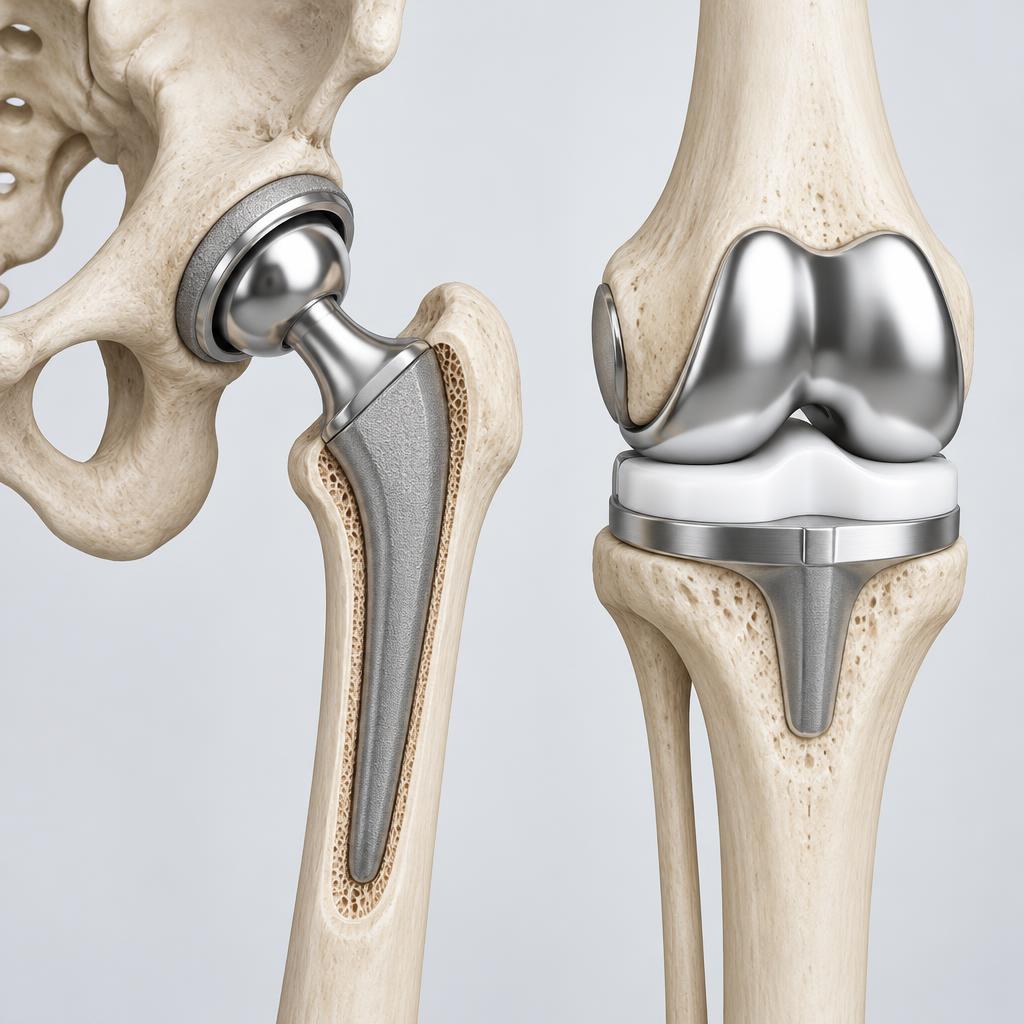
Infected hip or knee replacement (periprosthetic joint infection)
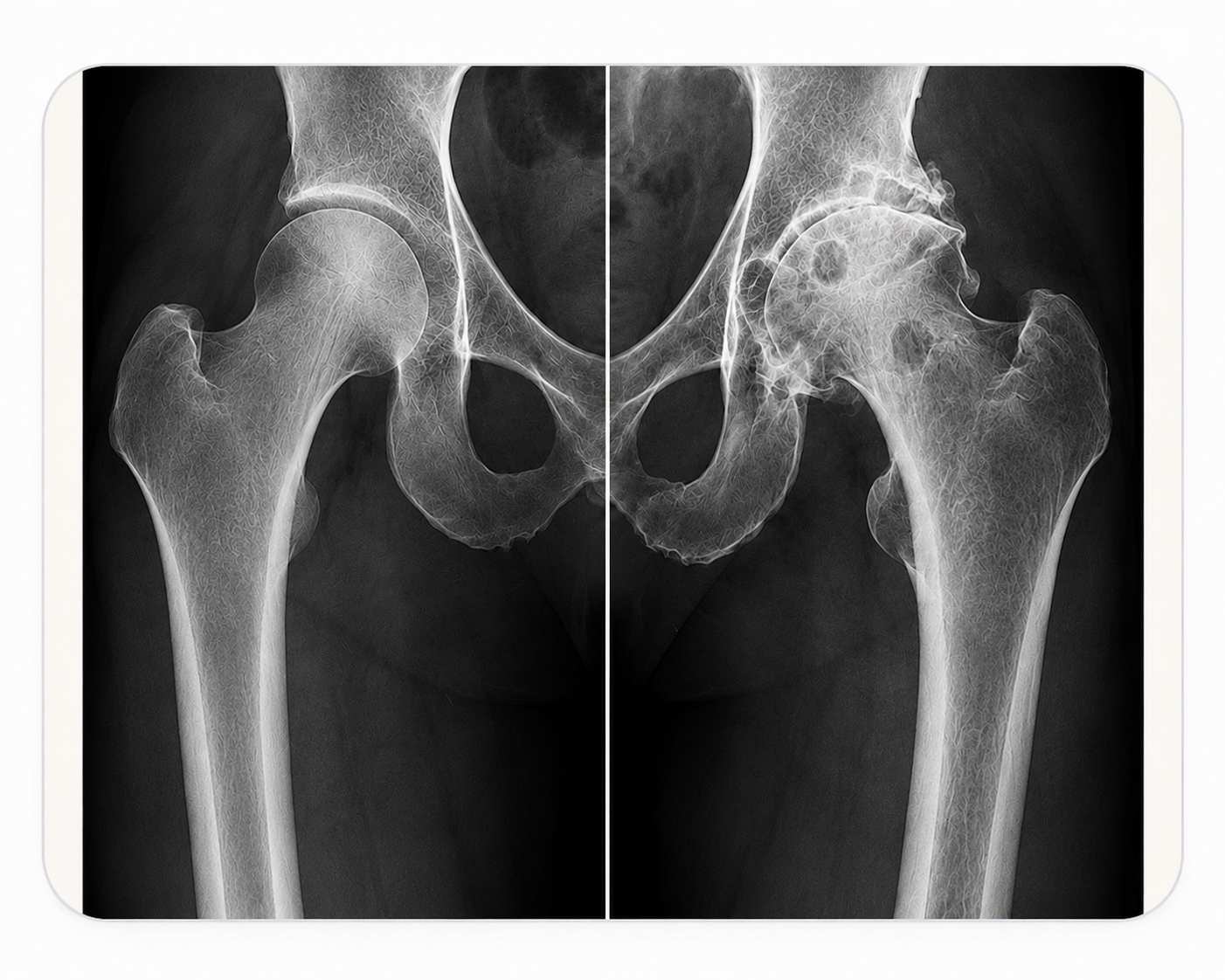
Short answer
An infection around a hip or knee replacement is called periprosthetic joint infection (PJI). I investigate painful replacements with clinical assessment, imaging, blood tests and joint aspiration where required. Treatment may involve DAIR, one-stage or two-stage revision, with antibiotics and a multidisciplinary team. Infected revisions are done at UHCW only.
Key facts
- Infected revisions are done at UHCW only. (Source: My revision hip and knee guides)
- DAIR is used for early infections with well-fixed implants. (Source: My revision hip guide)
- Blood tests and joint aspiration may be needed when infection is suspected around a replacement. (Source: My hip and knee pain guides)
- I discuss complex cases with the regional complex arthroplasty MDT and the Coventry & Warwickshire Bone Infection Group. (Source: My revision guides)
What symptoms should I look out for?
A painful hip or knee replacement needs careful assessment, including consideration of infection. Pain and stiffness can also have other causes, such as loosening, wear or instability.
If the joint becomes hot, red and increasingly swollen, or you feel unwell, seek urgent medical help, as these can be signs of infection. Do not wait for a routine appointment or a reply to an enquiry form.
How do I diagnose an infected replacement?
I assess your symptoms and the joint, review X-rays and arrange CT where required. Blood tests, including inflammatory markers such as CRP, and joint aspiration are used when infection is suspected.
What are the treatment options?
Treatment depends on how long the infection has been present and whether the implants are still fixed.
- DAIR (Debridement, Antibiotics, Irrigation, Retention): early infections with well-fixed implants — wash-out and liner exchange plus prolonged antibiotics.
- One-stage revision: all components removed, joint debrided, and new implants inserted in a single operation with antibiotic-loaded cement.
- Two-stage revision: gold standard for complex/chronic infections — cement spacer and 6–12 weeks of IV antibiotics, then re-implantation once infection is eradicated.
- Suppressive antibiotics for patients unfit for surgery.
Where is infected revision surgery performed?
Infected revisions are done at UHCW only.
My private consultations are at The Meriden Hospital and Nuffield Health Warwickshire Hospital, but infected revision surgery is not done at these private hospitals. NHS patients are seen at UHCW via GP or specialist referral.
My approach
- I assess the cause of a painful replacement before discussing treatment.
- I discuss complex cases at the regional complex arthroplasty MDT (Warwick and Worcester) and the Coventry & Warwickshire Bone Infection Group.
- I am an executive member of BAJIS.
- I work with microbiology and infectious diseases on the antibiotic protocol for infected cases.
- I tailor revision surgery to the failed components and the degree of bone loss.
Who I don't treat
- I do not offer sports knee or soft-tissue surgery (ACL reconstruction, meniscus surgery or arthroscopy). For those problems, I suggest seeing a sports knee specialist.
- Infected revision is not performed at the private hospitals. For patients unfit for surgery, suppressive antibiotics may be the safer option.
How do DAIR, one-stage and two-stage revision compare?
| DAIR | One-stage revision | Two-stage revision | |
|---|---|---|---|
| When it is used | Early infections with well-fixed implants | All components removed and replaced in one operation | Gold standard for complex or chronic infections |
| What happens | Wash-out and liner exchange | Joint debrided; new implants with antibiotic-loaded cement | Cement spacer first, then re-implantation once infection is eradicated |
| Antibiotics | Prolonged antibiotics | Antibiotic-loaded cement | 6–12 weeks of IV antibiotics between stages |
Cost, insurance and booking
I see insured and self-pay patients. Contact me to arrange a consultation, discuss the next steps and request a quote. Send an enquiry or call 024 7661 2681.